
A curved monitor wraps the image slightly around your field of view, reducing the distance between your eyes and the screen edges. Whether that matters depends on how close you sit, what you do on the screen, and how much desk depth you have. This guide covers what curved monitors actually do, when they’re worth the premium, and how to pick the right size and curvature for your setup in South Africa.
A curved monitor is a flat-panel display with a concave viewing surface — the panel itself is bent slightly so the edges curve toward the viewer. The original idea is that by making all parts of the screen the same distance from your eyes, the image is more consistent and the field of view is wider for the same panel size (Wikipedia — Curved monitor).
In practice, three things change:
Curved does not magically improve colour, contrast, or response time. Those depend on the underlying panel technology (IPS, VA, OLED) — see our desktop monitor guide for those factors.
If you sit dead-centre at a single screen for hours, a modest curve reduces eye-strain more than a bigger resolution increase at the same price point.
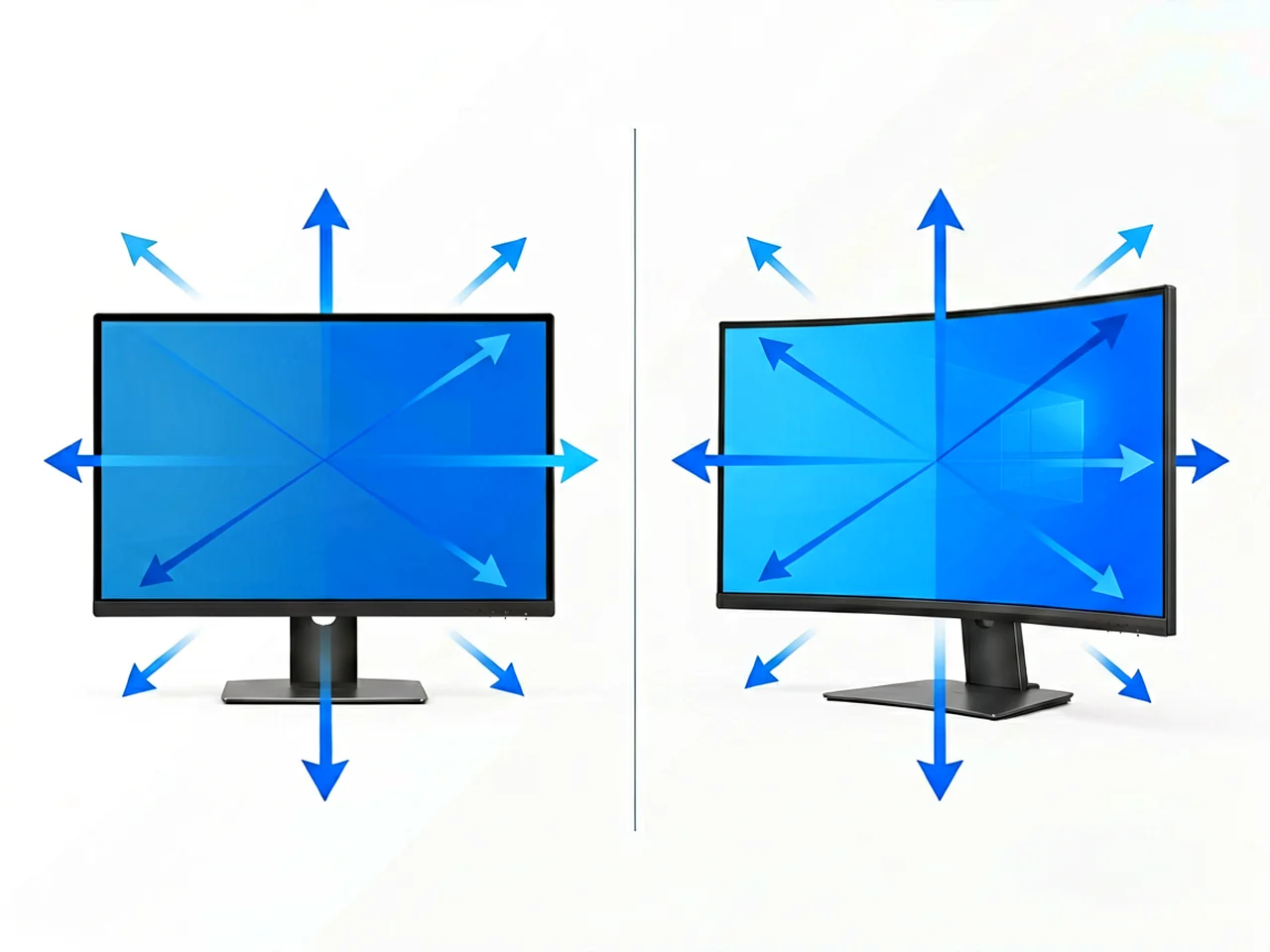
Image 2: Flat vs curved monitor comparison:
Alt: Side-by-side comparison of flat versus curved monitor showing different viewing angles and immersion
Prompt: Side-by-side infographic showing a flat monitor on the left and a curved monitor on the right, with arrows indicating viewing angles and immersive field of view, brand blue #0056FF accents, minimal style, no text, no labels
Curvature radius is measured in millimetres and describes the arc the panel makes. A smaller number means a tighter (more aggressive) curve.
| Radius | What it feels like | Best for |
|---|---|---|
| 1800R | Subtle curve, almost flat | 27–32″ general use, dual-monitor stacks |
| 1500R | Noticeable curve, easy to adjust to | 27–34″ gaming, single-screen productivity |
| 1000R | Strong curve, immersive but aggressive | 34–49″ ultrawide, sim racing, single-user |
The radius also has to match the screen size — a 1000R on a 27″ panel is more extreme than a 1000R on a 49″ ultrawide. If you want subtle, stay at 1800R. If you want immersive, 1500R is the sweet spot for most people.
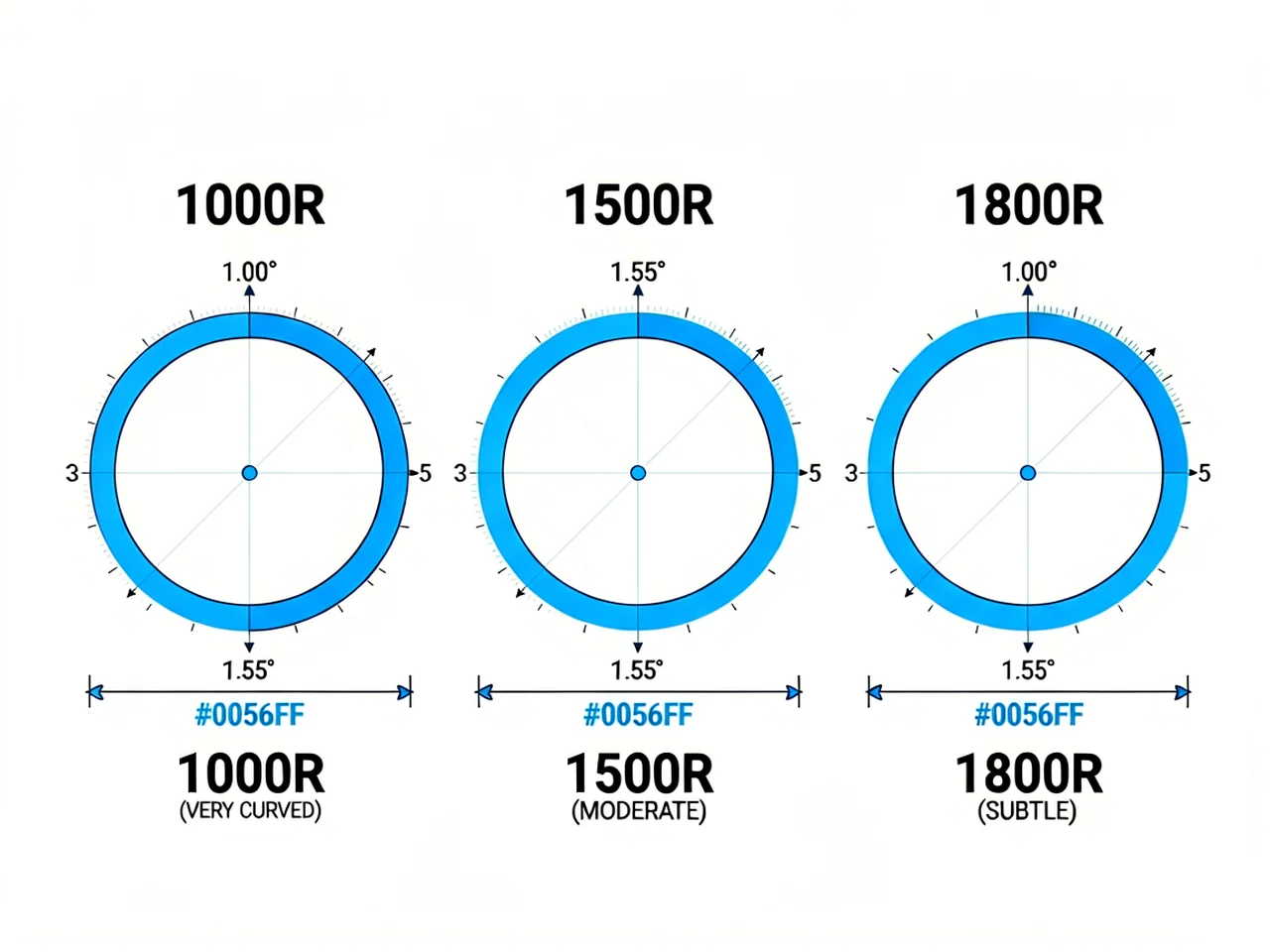
Image 3: Curvature radius comparison 1000R/1500R/1800R:
Alt: Infographic comparing three curvature radii: 1000R very curved, 1500R moderate, 1800R subtle
Prompt: Clean flat vector infographic showing three curvature radii: 1000R (very curved), 1500R (moderate), and 1800R (subtle), each illustrated as a segment of a circle with distance markers, brand blue #0056FF accents, no text
| Use case | Curved | Flat | Why |
|---|---|---|---|
| Gaming (single player, racing, flight sims) | ✅ Wins | — | More peripheral vision, more immersion |
| Productivity (split-screen, multi-window) | Tie | Tie | Depends on aspect ratio more than curve |
| Office work (documents, email, browser) | — | ✅ Wins | Curve adds nothing here |
| Media consumption (movies, video) | ✅ Wins | — | Cinematic feel, less letterbox distraction |
| Programming / data work | — | ✅ Wins | Curved text near edges can look warped |
| Shared viewing (multiple people) | — | ✅ Wins | Off-centre viewing at a curve distorts |
If you only do office work, a curved panel is paying for something you will not feel. If you game, watch movies, or work with wide timelines, the curve earns its place.

Image 4: Curved monitor use cases:
Alt: Three use cases for curved monitors: gaming, productivity, and media consumption side by side
Prompt: Flat vector illustration showing three use cases: gaming (controller icon), productivity (dual-window desktop icon), and media consumption (play button icon), each with a small curved monitor silhouette, brand blue #0056FF accents, minimal style, no text
Curved monitors are physically deeper than flat panels of the same size — the curve adds a few extra centimetres at the deepest point. A standard 27″ 1500R is typically 25–30 cm deep, including stand. Measure your desk from the wall to where your eyes are; you need at least 60–70 cm of total viewing distance for a 27″ to feel comfortable.
If you use a VESA arm, check the weight rating. A 32–34″ curved ultrawide is significantly heavier than a 24″ flat panel, and most cheaper arms max out around 9 kg. Get a heavy-duty arm rated for at least 12 kg if you go large.
Two 27″ curved monitors side by side look striking, but the bezels form a small V shape in the middle. For productivity, two flat 27″ panels with thin bezels are usually better. For sim games or a single ultrawide alternative, one 32:9 ultrawide curved (often 1800R or 1500R) replaces two screens cleanly.
Curved IPS and VA panels don’t suffer OLED-style burn-in. Clean the screen with a microfibre cloth — never press hard on the curve. Abrasive cleaners or paper towels can scratch the anti-glare coating.
Indicative 2026 retail ranges for new units in ZAR:
| Category | Price range (ZAR) | Notes |
|---|---|---|
| 27″ FHD 1500–1800R | R2,500 – R4,500 | Entry curved, office-friendly |
| 27″ QHD 165Hz 1500R | R4,500 – R7,500 | Gaming sweet spot |
| 32″ 4K 1500–1800R | R7,500 – R12,000 | Content / productivity |
| 34″ UWQHD 1500R | R9,000 – R14,000 | Ultrawide productivity |
| 49″ 32:9 1800R | R18,000 – R30,000 | Sim / dual-monitor replacement |
Compare prices at Takealot, Incredible Connection and local IT resellers. Look for warranty terms — curved ultrawides have more panel surface and more expensive backlight systems, so warranty matters.
Usually no. The benefit is minimal at 24–27″ and the premium over a flat panel is rarely worth it for documents, email and browser work. Save the curve for screens 32″ and up, or for media and gaming.
1500R is the safe default — noticeable curve, easy to adapt to. 1800R is more conservative. Avoid 1000R at 27″ unless you specifically want the aggressive wrap.
A modest curve keeps the screen edges at a more consistent distance from your eyes, which can reduce micro-adjustments your eyes make across a flat wide panel. The effect is subtle and varies by person.
Yes — most curved monitors support VESA 75×75 or 100×100. The curve does not interfere with the mount. Use an arm rated for the panel’s weight; curved 32″+ models are heavier than they look.
Curved panels are more fragile in transit than flat panels. If you order online, check the seller’s damage policy and consider local pickup if available.
Discrepancy Notice: Our online shop is still under preparation. Product prices, availability and shipping options are subject to change. This article is for informational purposes only — for product or compatibility questions, contact us at support@potatotech.co.za.
Related reading: our desktop monitor buying guide, portable monitor guide, and USB-C hub buying guide.
Cracked iPhone back glass? Learn DIY vs professional replacement costs in South Africa, how long it takes, and when to seek help.
How much does an iPad screen replacement cost in South Africa? Compare DIY vs professional repair costs for all iPad models.
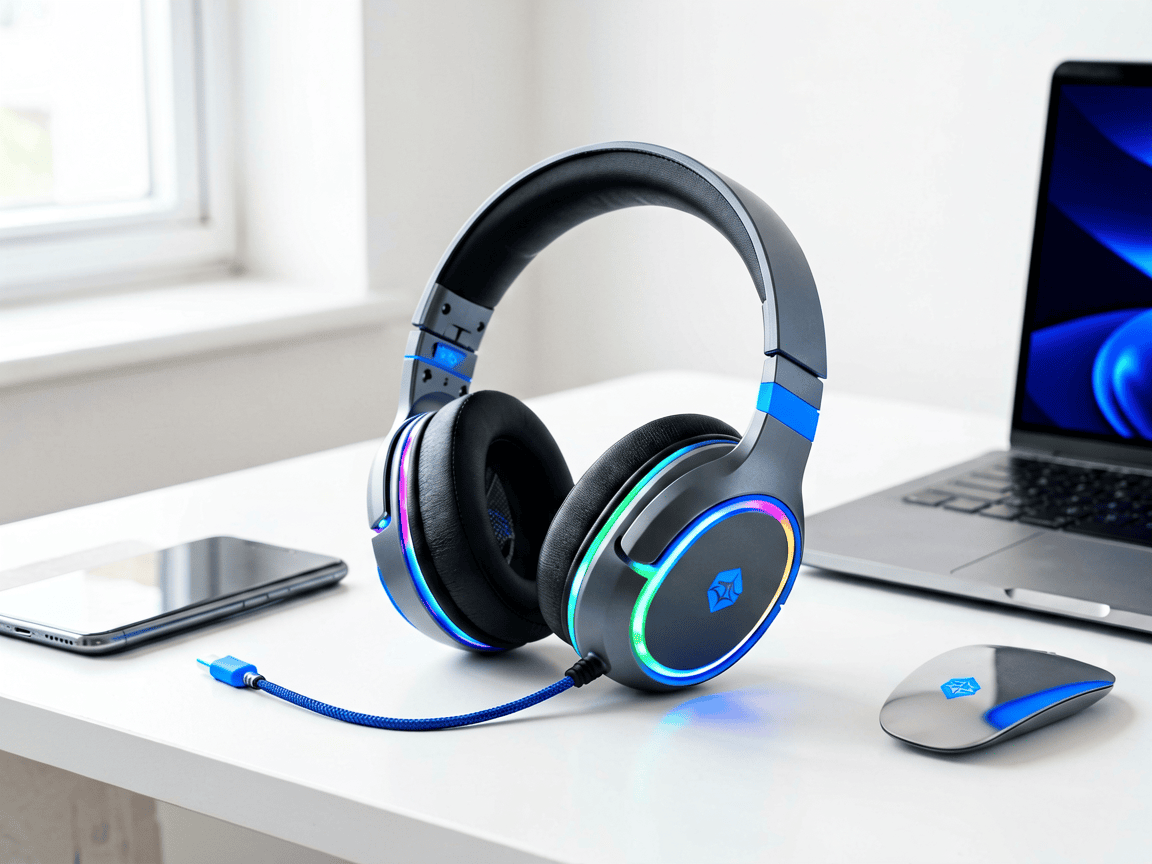
Choosing the right Bluetooth headphones in South Africa isn’t just about picking the first pair you see. Whether you’re commuting on the Gautrain, working from home, or gaming online, the right headphones make a real difference to your experience—and your wallet. This guide breaks down what actually matters when you’re shopping for wireless headphones in […]