
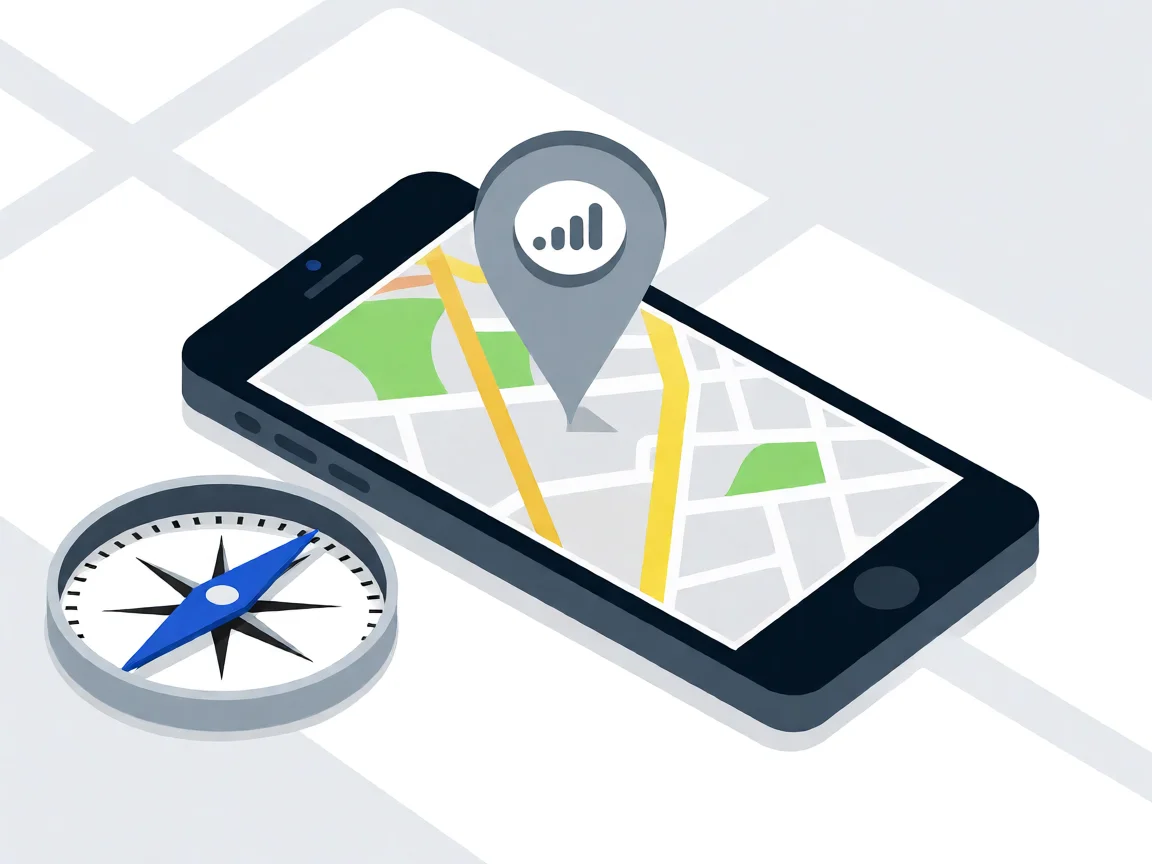
You open Maps or your taxi-hailing app, and the blue dot never settles, or it places you three streets away. You stand outside with a clear sky above you, and the phone still takes minutes to lock on, or it locks on and then drops your position into the middle of a field. Sometimes the GPS worked yesterday and fails today; sometimes it started after a screen replacement or a system update, and sometimes only the map app cannot see you while the camera and the calls work fine. The frustrating part is that the rest of the phone works, which means the fault is local to the GPS path.
GPS failure is one of the most common navigation complaints in South Africa, because the GPS antenna sits on a small flex inside the frame that gets pinched, forgotten, or splashed when a screen job or a spill goes wrong. This guide covers the 30-second resets, the software checks, the South African triggers that catch people out, and when the GPS antenna or its flex actually needs a repair.
The GPS in a modern phone is really three parts working together. The receiver chip on the mainboard listens for satellite signals, the antenna – a small flat flex that runs along the inside of the frame – picks up those weak signals, and the software turns them into the blue dot on your map. The chain is easy to break: the software can lose its location permission or cache, the antenna flex can be torn or loosened during a screen job, and water can corrode the connector that joins the antenna to the board. If any one of those three fails, the whole GPS path goes quiet even though the phone still makes calls.
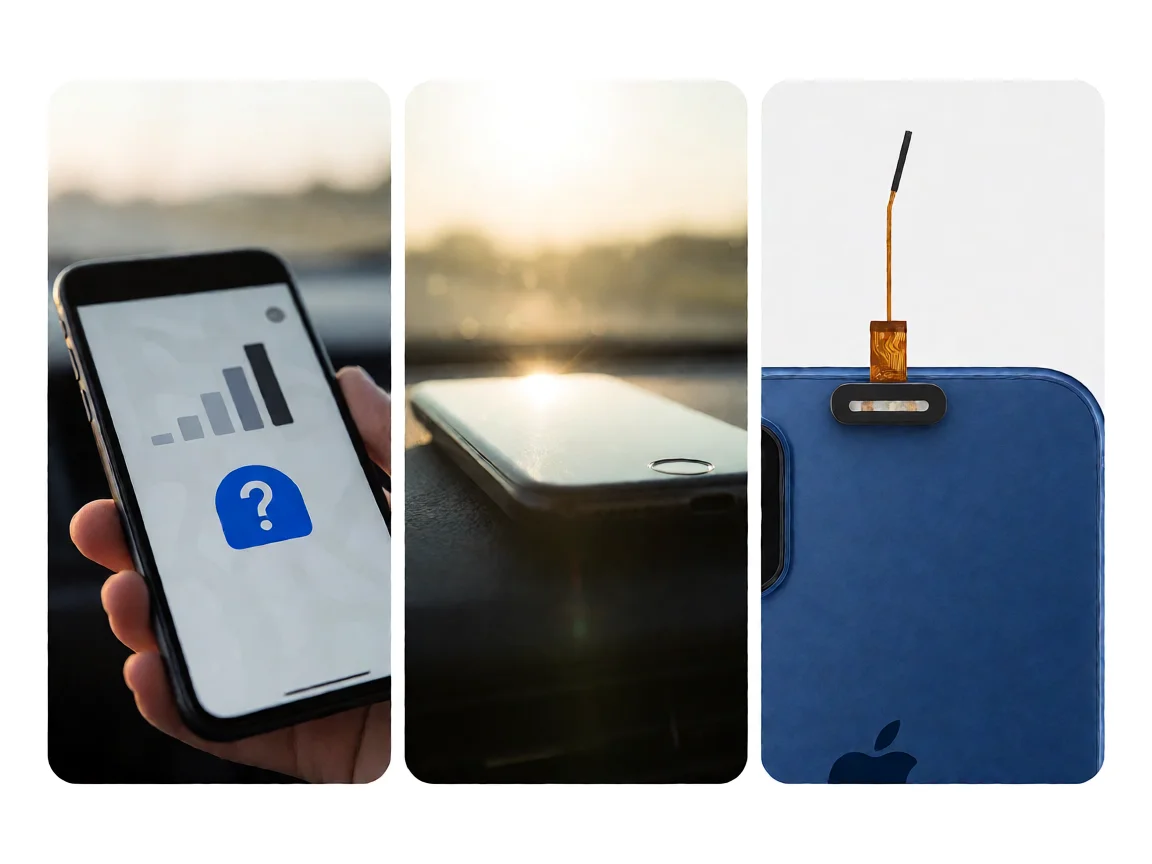
The five causes below account for most dead GPS units on South African repair benches, listed to rule them out in order.
Do the checks in order. Open a map app outside and wait 30 seconds to see if the blue dot appears, because GPS needs a clear view of the sky. Toggle location off and back on from quick settings to force the phone to re-scan. Check that the app has location permission set to While using the app or Always, not Never. Switch the location mode to high accuracy so the phone can use GPS, Wi-Fi, and mobile networks together. Finally, reboot the phone to clear any half-written GPS state left by a background app.
If the blue dot still will not appear after those five steps, the fault is not a permission toggle or a stale cache. Move to the phone-side fixes below before assuming the antenna is broken.
On Android, go to Settings > Location and check that Location is on, then open Settings > Apps > Google Maps and clear its cache. If the phone runs Google Play Services, make sure it is up to date, because a broken Play Services can silently kill GPS for every app. On iPhone, go to Settings > Privacy & Security > Location Services, switch it off, wait ten seconds, and switch it back on, then check that the map app has its permission set to While Using.
For “GPS worked before an update and stopped after”, the cause is usually the update interrupting the GPS stack. On Android, clear the cache of Google Maps and Google Play Services. On iPhone, toggle Location Services off and on, then restart. Our guide on phone won’t turn on: what to do first in South Africa explains how a half-written system update shows up across the phone’s radios and services.
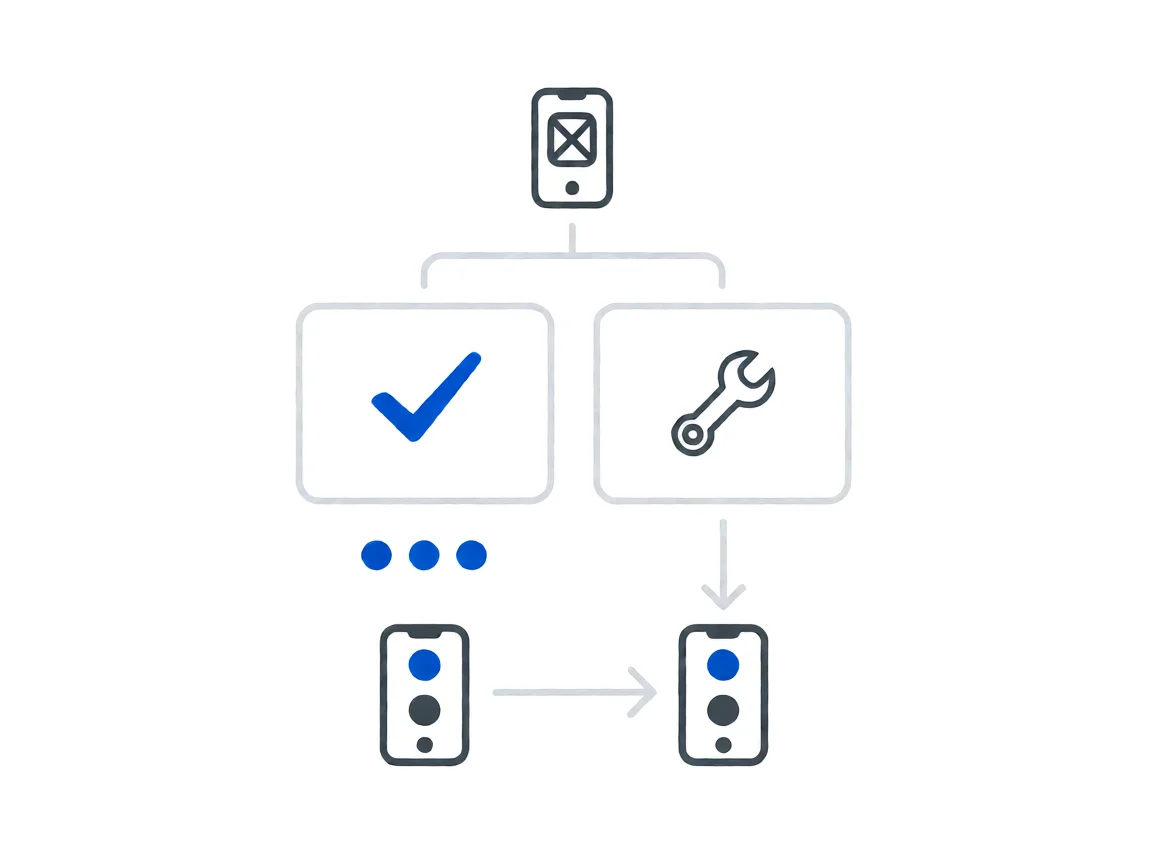
The fastest way to separate software from hardware is the map test. Open Google Maps or Apple Maps outside with a clear view of the sky and watch the blue dot. If the dot appears and tracks you as you walk, the GPS hardware is fine, and the fault is software – an app setting, a permission, or a cache. If the dot never appears, appears in the wrong place, or jumps around while you stand still, the fault is likely the antenna flex or the connector, not a setting you can fix.
Two South African factors cause most GPS failures here. The first is the non-original screen job: a replacement using a non-original panel, or rushed without a checklist, can pull the GPS antenna flex loose or tear its connector. The phone still works and makes calls, but the GPS antenna path is dead. A low-cost shop that skips reseating the antenna flex is the most common reason a phone loses GPS the same day. If the GPS died right after a screen replacement, take the phone back to the shop that did the work – the reseat is a quick job for them.
The second is water and humidity. Salt air on the coast and a splash at the pool corrode the connector where the GPS antenna joins the board. The GPS fades or fails while calls and data still work, which is why a water-damaged phone that still makes calls often cannot find itself on a map. Our guide on what to do when a phone gets water damaged in South Africa covers the first 24 hours, including why the rice trick does more harm than good.
A phone that had a working GPS before a screen swap and lost it afterwards almost always has the antenna flex disturbed. The flex runs along the top edge of the frame near the earpiece, and a screen job that pulls the frame without loosening the antenna bracket can shear the connector. The fix is to reopen the phone, reseat the antenna flex, and refit the bracket – a quick job for the original shop. Our guide on iPhone screen cracked: repair or replace in South Africa explains what to expect from a proper screen replacement, including the checks a good shop runs before handing the phone back.
The GPS antenna connector sits low against the frame, so after a spill the corrosion creeps along the connector and across the flex pads. The GPS fails while the screen, calls, and charging still work – which is why a water-damaged phone that still works often cannot lock on to satellites. Clean the connector with isopropyl alcohol; if a pad is pitted, replace the antenna flex, which carries a fresh connector on board.
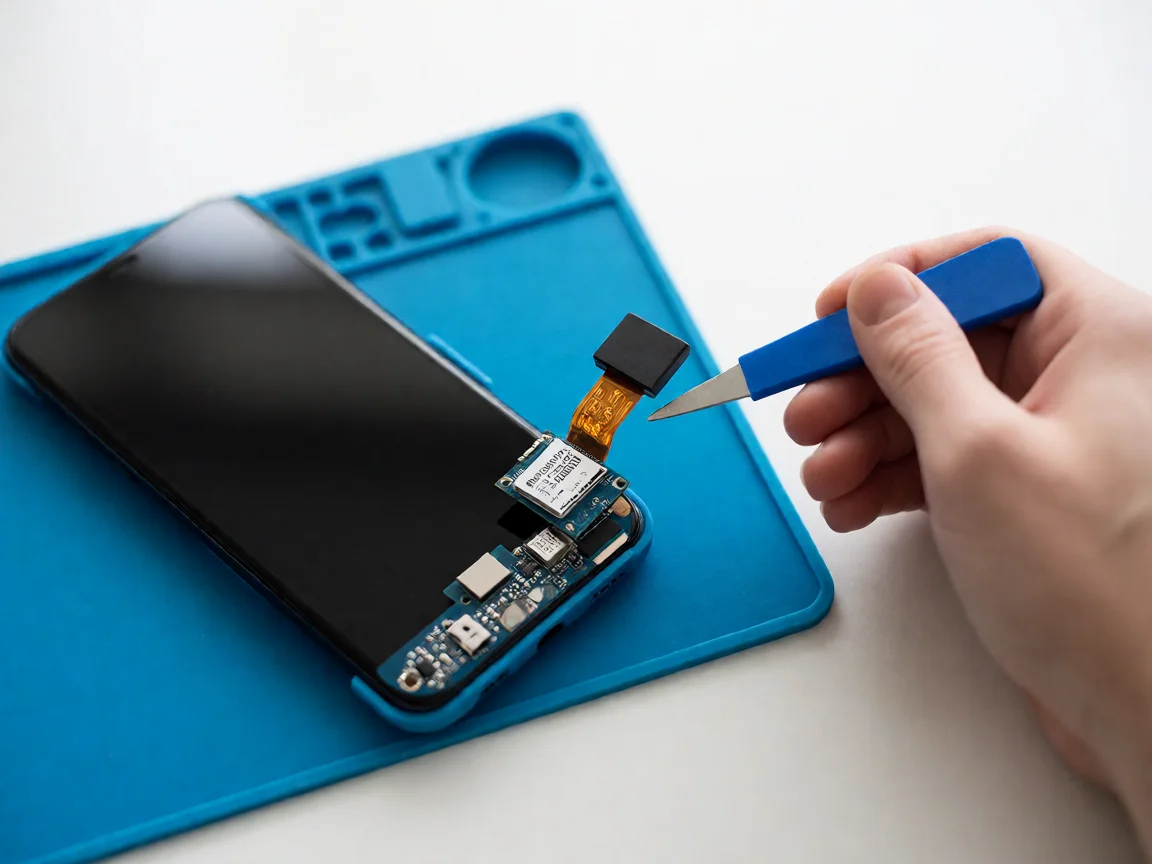
If the resets, the map test, and a screen-repair reseat all fail, the fault is the antenna flex or its connector on the mainboard. A drop can crack the flex, and corrosion or a bent connector can break the signal path. This is a board-level job: the screen is lifted, the old flex is unclipped, and a new one is laid down and reconnected. The part is cheap; the labour is opening the phone properly and reseating the antenna flex without tearing it.
A phone that cannot lock on to GPS after a clean reset with location on high accuracy is almost certainly a hardware fault, not a settings one. Settings faults stop the map dot from settling; a dead antenna flex keeps GPS silent in every app, no matter what you toggle.
Local repair shops in South Africa typically charge a diagnostic fee between R250 and R450 to open the phone, confirm whether the fault is software or the antenna flex, and quote the rest. Many shops credit the fee back if you proceed with the repair.
A software-only fix, where the shop clears the GPS cache or finishes a half-written update, is often just the diagnostic fee. An antenna flex replacement, where the flex is corroded or torn, needs the frame opened and runs R200 to R600, including labour, with iPhone and Samsung on the higher end. If a non-original screen disturbed the antenna flex, fitting a correct compatible screen adds the screen price on top. A mainboard receiver repair is the most expensive at R800 to R2000 and is worth it mainly on higher-value phones.
This article is general guidance based on manufacturer documentation, repair-shop experience, and the sources linked above. It is not a substitute for a professional diagnostic, and it is not a guarantee that any specific phone can be saved. If your phone is under manufacturer warranty, opening it will void that warranty. Always stop work and seek a qualified technician if the phone shows any sign of battery swelling, overheating, or chemical smell. POTATOTECH is a South African retailer of phone parts and repair tools and does not offer a phone repair service.
Why did my phone GPS stopped working after a screen replacement?
Because the GPS antenna flex runs along the top edge of the frame near the earpiece, and a screen job that pulls the frame without loosening the antenna bracket can shear the connector. The fix is to reopen the phone, reseat the antenna flex, and refit the bracket – a quick job for the original shop. Take the phone back to the shop that did the work, because the reseat is quick for them.
Why is my GPS not working after a software update?
Because an interrupted update can leave the GPS cache or the location service half-written. On Android, clear the cache of Google Maps and Google Play Services, then reboot. On iPhone, toggle Location Services off and on, then restart. If it still fails, check for another update, because GPS bugs are usually patched in the follow-up release.
Why does my GPS work indoors but not outside?
GPS needs a clear view of the sky to hear satellites. Indoors, under a metal roof, or in heavy cloud, the phone may fall back to Wi-Fi and mobile-network positioning, which is why the blue dot is roughly right inside but slow or wrong outdoors. If it also fails outside in an open area with location set to high accuracy, the antenna flex is likely the fault.
Why is my phone GPS location wrong or jumping around?
Because the phone is mixing weak satellite signals with Wi-Fi and mobile-tower data, or the GPS cache is corrupted. Move to an open area, clear the map app’s cache, and set Location to High accuracy. If the dot still jumps while you stand still, the antenna flexes, or its connector is damaged, it needs replacement.
How do I fix the phone GPS without paying for a repair?
First, set the location to high accuracy and test outside in an open area. Toggle location off and on, clear the map app’s cache, and reboot. Check the app has location permission set to ‘While using’ or ‘Always’. If the blue dot appears and tracks you after those steps, the fault was software and cost nothing to fix. If it still fails outdoors, the antenna flex is the fault.
How much does it cost to fix GPS on a phone in South Africa?
A diagnostic is typically R250 to R450, often credited back. A software-only fix is often just that fee. An antenna flex replacement runs R200 to R600, including labour, iPhone and Samsung higher. If a non-original screen disturbed the antenna flex, a correct compatible screen adds the screen price on top. A mainboard receiver repair is the most expensive at R800 to R2000; it’s worth it mainly on higher-value phones.
Most cracked phone panels don’t come from a shaky hand. They come from the wrong temperature. Heat the adhesive too little and the glass fights you until it snaps. Heat it too much, or in one spot, and you cook the panel underneath instead — which is how “repair” turns into “replace”. This guide is […]
You tap an app and nothing happens for ten seconds, then the whole screen freezes mid-animation. You wait, you tap again, the phone buzzes once and sits there. Sometimes a restart clears it for a day, sometimes it freezes again as soon as you open WhatsApp, and sometimes it started after an update or when […]
You open Maps or your taxi-hailing app, and the blue dot never settles, or it places you three streets away. You stand outside with a clear sky above you, and the phone still takes minutes to lock on, or it locks on and then drops your position into the middle of a field. Sometimes the […]