
An iPhone 15 screen replacement in South Africa starts at R730 for the panel alone (POTATOTECH shelf price, 30 October 2026) and runs to roughly R2,500–R8,500 fitted, depending on the screen tier and who fits it. The part is cheap. The expensive mistake is ordering the wrong screen: Apple builds four different displays for the iPhone 15 family, and two are the same size with the same pixel count.
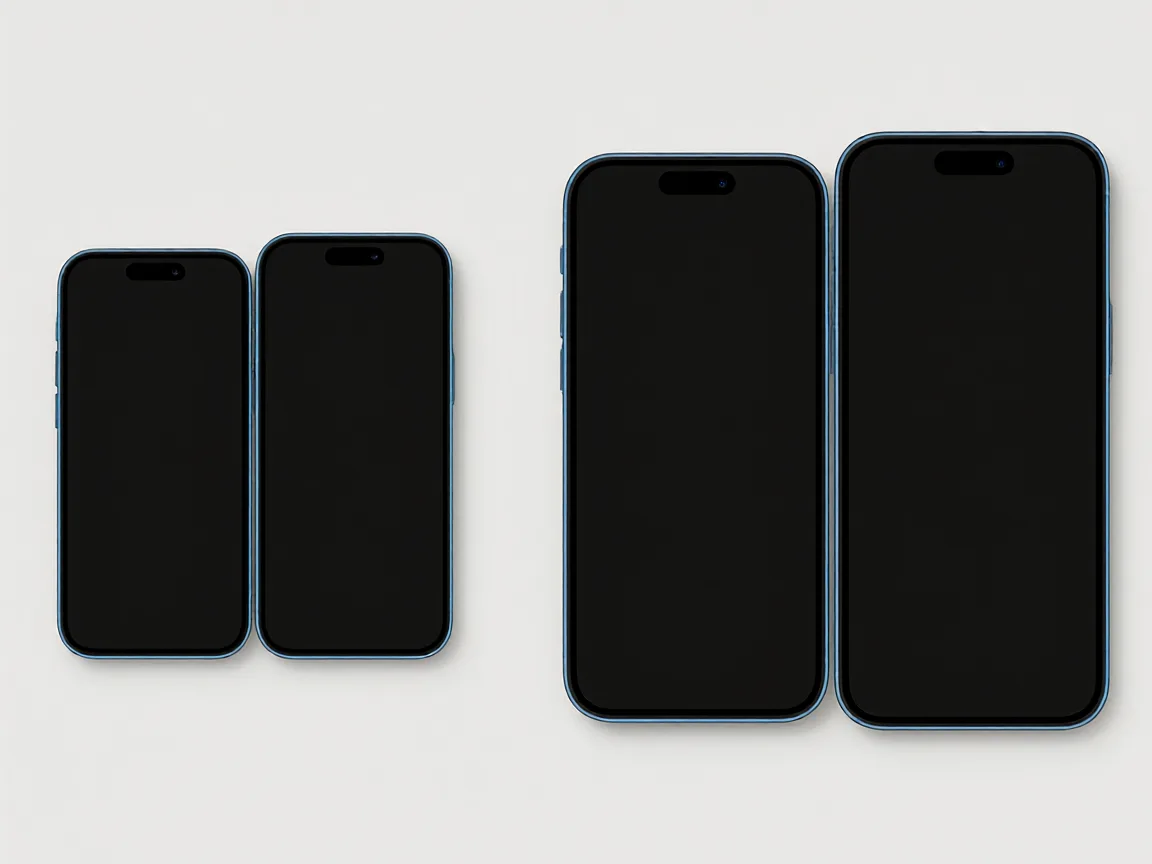
Check the resolution before you order an iPhone 15 screen and you will still be able to order the wrong one. Apple lists the iPhone 15 Plus and the iPhone 15 Pro Max as 6.7-inch OLED displays, both 2796×1290 at 460 pixels per inch. The iPhone 15 and iPhone 15 Pro are the mirror image: both 6.1-inch, both 2556×1179. Resolution tells you which pair your handset belongs to, not which model inside that pair.
That collision is not theoretical. In October 2026 we compared the model numbers on our own iPhone 15 screen listings against Apple’s published list. One listing carried four model numbers, and all four belonged to the iPhone 15 Plus rather than the 15 Pro Max. Its size and resolution fields were correct, which is why the error survived a casual read. We are correcting that listing, and the check below shows you how to run the same comparison on any listing, including ours.
There are four iPhone 15 models and four different screens:
| Model | Model numbers | Display | Chip | Our price (30 Oct 2026) |
|---|---|---|---|---|
| iPhone 15 | A2846, A3089, A3092, A3090 | 6.1″ OLED, 2556×1179 | A16 Bionic | R730 |
| iPhone 15 Plus | A2847, A3093, A3096, A3094 | 6.7″ OLED, 2796×1290 | A16 Bionic | not stocked |
| iPhone 15 Pro | A2848, A3101, A3104, A3102 | 6.1″ OLED, 2556×1179 | A17 Pro | R769 |
| iPhone 15 Pro Max | A2849, A3105, A3108, A3106 | 6.7″ OLED, 2796×1290 | A17 Pro | R945 |
From Apple’s technical specification pages, checked 30 October 2026. The bold code is the one South African units carry: Apple lists it under “other countries and regions”, the bucket South Africa falls into.
That catches local buyers more often than you would expect. Supplier listings are usually built from American stock lists, so the code they lead with is A2846, A2847, A2848 or A2849 — the US variants. A South African handset shows A3090, A3094, A3102 or A3106, none of which appear in most imported listings. If a seller quotes only the US code, treat it as unanswered.
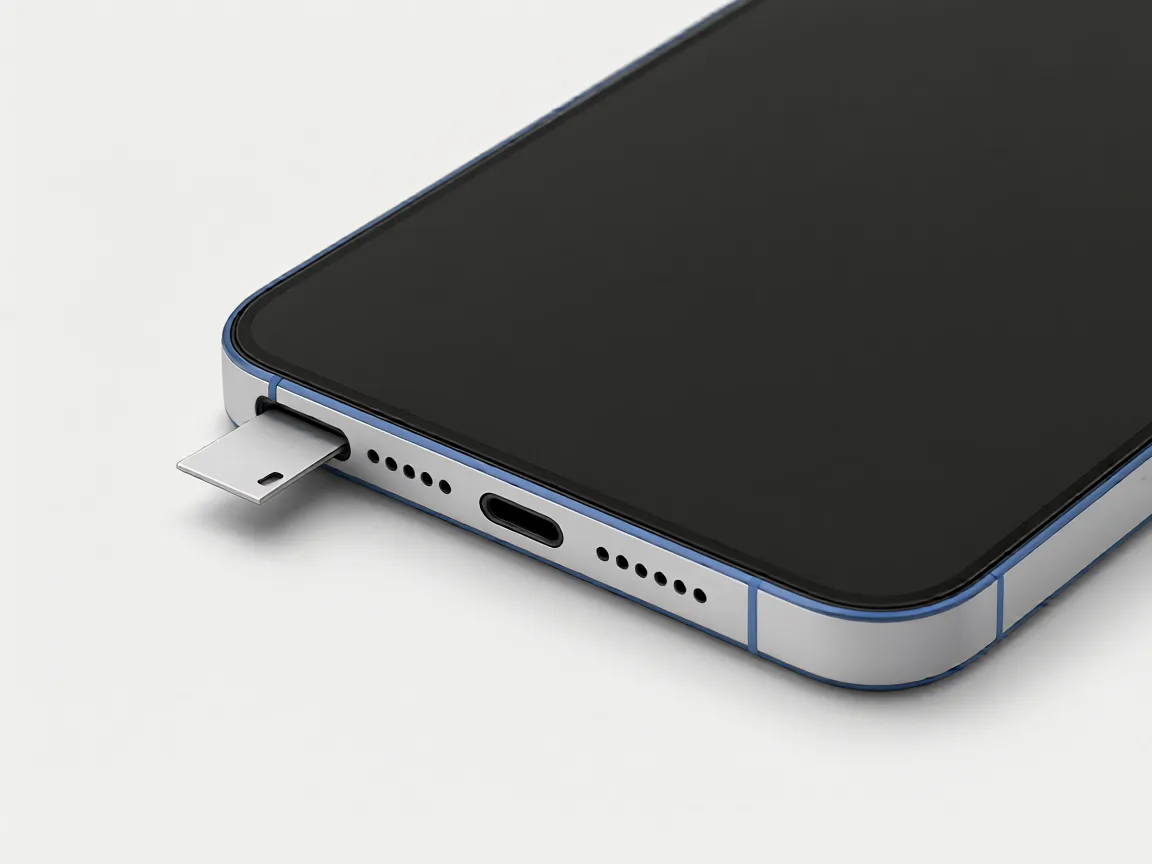
Order by model number, not by screen size. Apple’s guidance is short: open Settings, tap General, then About; the part number sits next to “Model Number”, and tapping it reveals the model number. On an iPhone 8 or later with a SIM tray, pull the tray and read the number inside, on the side facing the display. Without a SIM tray, it is etched into the USB-C connector.
An iPhone 15 screen is usually repairable, and a swap is one of the cheaper major repairs on the device. The question is whether the rest of the handset justifies it. A 2023 phone is three years into its life, and by the time a screen cracks the battery and frame have usually done more work than the display.
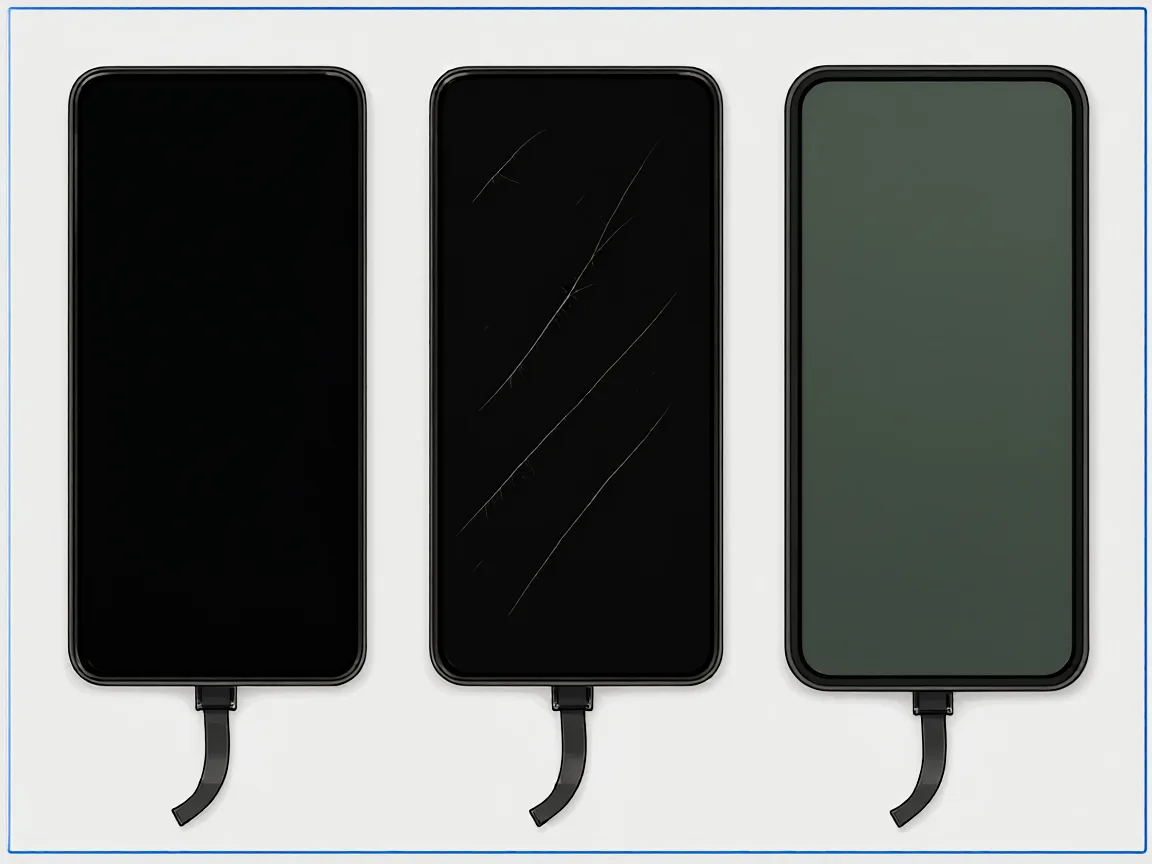
| Check first | Repair still makes sense | Walk away |
|---|---|---|
| Damage scope | Glass cracked, image clean, touch works | Artefacts, lines, dead areas |
| Frame | Straight, screw bosses intact | Bent frame, stripped holes |
| Battery | No swelling, normal charge | Swollen, dented, or hot while idle |
| Liquid history | No corrosion or sticky buttons | Corrosion at the board or SIM tray |
| Value | Working phone, good body | Faults stacking up past its worth |
One local wrinkle: South African workshops quote the iPhone 15 family as a single band. iAssist lists one “iPhone 15 series” row spanning aftermarket, OEM pulled and OEM brand new panels; ZA Support quotes “the iPhone 15 and iPhone 15 Pro Max” together. A 15 Plus and a 15 Pro Max are both 6.7-inch but do not take the same screen, so one band price cannot cover both. Ask for a price naming your model number.
Screen grade words are not standardised here, so define them first. OEM means original equipment manufacturer, the company that built the part. OEM pulled means a genuine part taken from another handset, usually one written off for unrelated damage. OEM brand new means a genuine, uninstalled part. Aftermarket means a third-party replacement built by someone other than Apple. Refurbished means a used part tested and restored. Original means the factory part. Fake or copy means an imitation, and you should refuse to buy it.
| Tier | What it is | What you give up |
|---|---|---|
| OEM brand new | Apple factory panel, sealed | Nothing on the panel; the price is the cost |
| OEM pulled | Genuine panel from a written-off phone | Unknown history, possible backlight wear |
| Aftermarket | Third-party panel, often LCD not OLED | Quality, gamut, brightness, True Tone |
| Fake or copy | Unbranded imitation | Quality, durability, safety margin |
Price bands for each tier are in the cost table below.
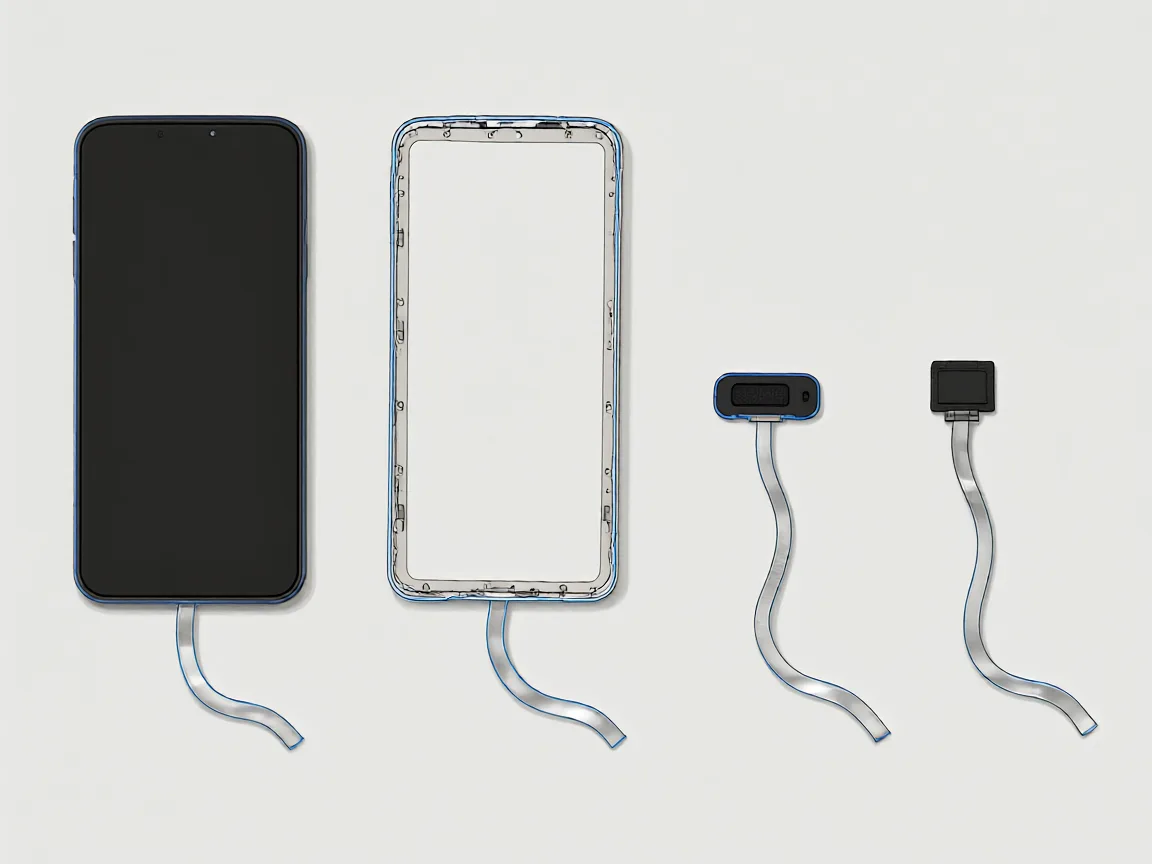
A second decision sits inside the tier: the frame. A “with frame” screen arrives with the midframe bonded to the display, so you replace both in one step. A “without frame” screen arrives as a bare panel, and you transfer your original frame, earpiece and front sensor components across. The iPhone 15 panels we sell come without a frame, which keeps the price down but makes the transfer part of the job.
Here is the market picture, all four South African sources checked live on 30 October 2026.
| Route | Cost (ZAR) | Source |
|---|---|---|
| Panel only, no frame or labour, 6.1″ (iPhone 15 / 15 Pro) | R730 / R769 | POTATOTECH shelf, 30 Oct 2026 |
| Panel only, no frame or labour, 6.7″ (15 Pro Max) | R945 | POTATOTECH shelf, 30 Oct 2026 |
| Independent workshop, aftermarket | R3,500–R5,500 | iAssist, 30 Oct 2026 |
| Independent workshop, OEM pulled | R4,500–R6,500 | iAssist, 30 Oct 2026 |
| Independent workshop, OEM brand new | R6,800–R8,500 | iAssist, 30 Oct 2026 |
| Independent workshop, tier not stated (iPhone 15 and 15 Pro Max) | R2,500–R4,200 | ZA Support, 30 Oct 2026 |
| Authorised channel, 15 Pro Max | about R10,000 | Lai Lai Pro citing Apple iStore, 30 Oct 2026 |
| Specialist fitting, original panel | about R5,800 | Lai Lai Pro, 30 Oct 2026 |
Two notes. The two ZA Support pages disagree: one puts the iPhone 15 between R2,500 and R4,200, the other between R3,500 and R4,200, glass versus full OLED panel. We use the wider band. Second, the spread between the lowest aftermarket fitting and an authorised repair is roughly a factor of four, and none of that gap is labour. It is the panel.
Buying the panel yourself, the arithmetic is straightforward: R730 for the iPhone 15 screen, plus your time, plus the risk that a bent frame or a torn flex turns this into a bigger job. Not opening the phone, compare quotes against the fitted numbers above.
True Tone and auto brightness. Apple’s parts pairing restricts how display data is transferred. iFixit’s iPhone 15 guide records that on iOS 17.6 and earlier, True Tone and auto brightness are disabled after a screen replacement even with an original Apple screen, and that newer iOS versions may restore them automatically. With a genuine panel, Apple’s Repair Assistant can calibrate it. On an aftermarket panel there is no factory pairing, so expect colour temperature that does not auto-adjust.
Face ID and the ambient light sensor. The sensor sits behind the screen, beneath the cut-out for the Face ID sensors, and has to come across with the display. It is paired to the individual phone at the factory, so if it is damaged or left behind, Face ID stops working and only Apple can restore it. Pull the sensor assembly across deliberately; do not assume it travels with the new panel.
Water resistance. Apple rates the iPhone 15 as IP68, six metres for up to 30 minutes under IEC 60529, and that rating belongs to a sealed factory phone. iFixit’s guide notes that water resistance is compromised until new adhesive is fitted, and lists a display assembly adhesive as a required part. Treat the phone as water-sensitive afterwards unless the seals were replaced.
Panel technology. The iPhone 15 shipped with an OLED panel rated at a 2,000,000:1 contrast ratio, 1,000 nits typical brightness, 1,600 nits peak HDR and 2,000 nits peak outdoor, across the P3 wide colour gamut. An aftermarket TFT panel cannot deliver those figures. Our own specification states the panel is TFT and that colours and brightness can differ from the factory screen. That is the honest trade: a sharp, everyday display for a fraction of the price, without the OLED look.
The listing you are reading. The fifth risk is the one this article started with. We found it in our own catalogue audit. A listing can carry the right size and resolution and still have the wrong model numbers attached, because those fields are maintained separately and copy between similar products. Find your model number, then check the listing code matches it. If a listing names a family rather than specific codes, ask for the codes in writing before you pay. On a R730 part that may be a R3,500 mistake, not a detail to wave through.
We sell aftermarket panels, so it is worth being straight about who they suit. They suit a repair shop that needs a dependable, warranty-backed panel to get a customer’s phone working again, a technician who wants a repeatable stock item with a stated model code, and an owner whose phone is otherwise sound and wants a sensible repair rather than an original-part bill. Our panels carry 180 days of cover against manufacturing defects and arrive as a complete display assembly with isolation film, tools and an installation guide.
They do not suit someone who wants the original OLED look: deep blacks, the P3 wide colour gamut, 2,000-nit outdoor peak brightness or auto-adjusting True Tone. Nor a phone with a bent frame, a swollen battery or liquid damage. Nor a first-timer on their only phone.
The middle path is worth considering if the panel matters to you: a genuine OEM panel fitted by an independent workshop. Lai Lai Pro quotes around R5,800 for an original panel fitted on the iPhone 15 Pro Max, between the aftermarket band and the authorised-channel price of about R10,000. You give up some saving and gain the original display.
iFixit rates its iPhone 15 screen replacement guide as moderate difficulty, one to two hours across 65 steps. Its tool list is the realistic shopping list:
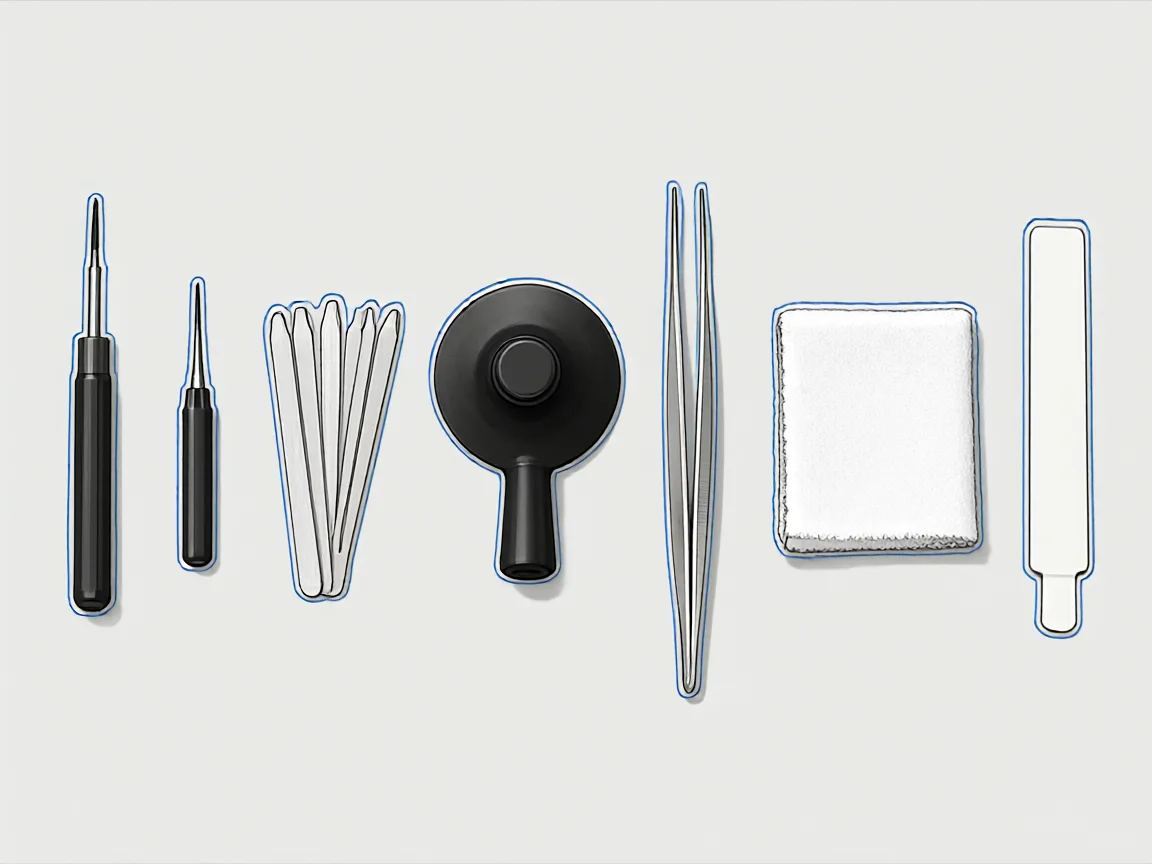
| Tool | Why the job needs it | Optional? |
|---|---|---|
| P2 pentalobe screwdriver | Removes the bottom screws | Required |
| Tri-point Y000 screwdriver | Internal screws near the sensor | Required |
| Opening picks, set of six | Slices the adhesive safely | Required |
| Suction handle | Opens the first gap | Required |
| Hair dryer | Softens the adhesive | Required |
| Tweezers | Lifts sensor and flex cables | Required |
| Isopropyl alcohol, microfibre cloths | Cleans adhesive residue | Required |
| Heat gun, spudger, packing tape | Alternatives for stubborn seals | Optional |
| Display assembly adhesive | Restores the factory seal | Required part |
Three details carry most of the risk. The iPhone 15 battery cannot be disconnected during this repair, so iFixit tells you not to use metal prying tools or touch exposed contacts. There is a plastic bezel on the underside of the screen with a seam between it and the display panel, and the pick goes under the bezel. And let the battery drain below 25 per cent first, because a charged lithium-ion battery punctured by a tool is a hazard.
Pick depth matters too: iFixit specifies no more than 3 mm along the bottom edge and 5 mm along the right edge, with the pick kept in the corner so the adhesive does not re-seal behind you. Get those numbers wrong and you cut flex cables, not adhesive.
Our own position is simple. We list professional installation as recommended on our product pages, and that holds for most first-timers. The job is not technically extreme, but the failure modes are expensive.
Do not seal the phone up and hope. iFixit marks a test point after you connect the screen and power on, before reassembly. Run through this list with the phone open:
Most bad outcomes are recoverable if you catch them early.
The decision to stop repairing shows up in the cost, not the diagnosis. Past a second screen, a battery, and into frame or board work, the parts bill can pass what the phone would fetch second-hand. Compare against a replacement handset.
R730 for the iPhone 15 panel alone from our shelf, R769 for the 15 Pro and R945 for the 15 Pro Max, checked 30 October 2026. Fitted at an independent workshop, published prices run from about R3,500 for an aftermarket panel to about R8,500 for an OEM brand new one, with authorised-channel work on the 15 Pro Max around R10,000.
No. They share a display size and a pixel count, which is why the mix-up happens, but the model numbers differ: the iPhone 15 uses A2846, A3089, A3092 and A3090, the iPhone 15 Plus uses A2847, A3093, A3096 and A3094. We do not stock a 15 Plus panel.
It depends on the panel and your iOS version. iFixit’s iPhone 15 guide records that on iOS 17.6 and earlier, True Tone and auto brightness are disabled after a screen replacement even with an original Apple screen, and that newer iOS versions may restore them automatically. On an aftermarket panel there is no factory pairing.
Not if the transfer is done properly. The ambient light sensor sits behind the screen under the Face ID cut-out and has to be moved across, and it is paired to the individual phone at the factory. Damaged or left behind, Face ID stops working and only Apple can restore it.
Discrepancy notice: prices, availability and repair terms change. Every price here was collected on 30 October 2026 and is a market reference, not a quote. Whether a replacement is worthwhile depends on your handset’s condition and the all-in quote you get. For current availability and specifications, contact us at support@potatotech.co.za or use our Contact Us page.
Related reading: iPhone screen replacement cost in South Africa · iPhone 16 screen replacement in South Africa · Is your iPhone screen original? · Browse our iPhone replacement screens by model.
Samsung Galaxy A14 screen replacement in South Africa: part prices, the 4G versus 5G model trap, why no OLED exists for this phone, and honest DIY difficulty.
Samsung Galaxy A05 screen replacement in South Africa: part prices, the A05s and A06 model traps, with-frame versus bare panel, and the honest DIY difficulty.

Compare Samsung Galaxy A-series screen part prices in South Africa, understand what changes the fitted repair cost, and check your exact model before ordering.
One Response