POTATOTECH is currently in pre-launch. Product information and repair guides are available to browse. Online ordering and payment are not yet available.
iPad Screen Replacement Cost in South Africa: Complete 2026 Guide
A cracked iPad screen costs between R1,200 and R3,500 at independent repair shops across South Africa. Apple Authorised Service Providers charge R3,500 to R8,000 depending on the model and damage type. DIY kits range from R400 to R1,500 but carry significant risk of damaging the display beyond repair.
The price gap between professional repair and DIY replacement is substantial. An independent shop in Pretoria might fix your iPad 9 for R1,400, while an Apple Authorised Service Provider in Sandton could quote R4,200 for the same model. This difference reflects not just the part cost, but expertise, warranty coverage, and the risk of permanent damage if the repair fails.
Understanding your options before handing over your device helps you make an informed decision. This guide breaks down realistic costs for all iPad models, explains what affects pricing, and helps you decide whether professional repair or DIY replacement makes sense for your situation.
Cost Breakdown by iPad Model (2026)
Screen replacement costs vary dramatically across iPad models. Here is what you can expect to pay at South African repair shops in 2026:
iPad Model
Independent Shop (ZAR)
Apple Authorised (ZAR)
DIY Kit (ZAR)
iPad 9 (10.2″)
R1,200–R1,800
R3,500–R4,500
R400–R800
iPad 8 (10.2″)
R1,200–R1,800
R3,500–R4,500
R400–R800
iPad 7 (10.2″)
R1,000–R1,600
R3,200–R4,000
R350–R700
iPad Air (4th/5th gen)
R1,800–R2,500
R4,500–R5,500
R600–R1,000
iPad Pro 11″
R2,200–R3,000
R5,500–R6,500
R800–R1,200
iPad Pro 12.9″
R2,500–R3,500
R6,500–R8,000
R1,000–R1,500
These prices cover glass-only replacement when the display still functions properly. If the LCD is damaged, costs increase significantly because the entire display assembly must be replaced. Always request a written quote that specifies whether the price includes glass only or full display assembly replacement.
Factors That Affect Screen Replacement Cost
Several variables influence the final price beyond the basic model comparison. Understanding these factors helps you evaluate quotes accurately:
Damage type. Glass-only cracks cost less than LCD damage. If the display still shows images correctly but the glass is shattered, glass replacement is cheaper. If colours appear distorted, lines show on screen, or touch becomes unresponsive, the LCD is damaged and requires full assembly replacement.
Part quality. Original Apple parts cost more than OEM or aftermarket alternatives. Independent shops typically offer third-party glass at lower prices, while Apple Authorised providers use only genuine components.
Shop location. Johannesburg and Cape Town shops charge 10–20% more than centres in Pretoria, Durban, or smaller cities. Rent and operational costs drive these regional differences.
Model age. Older iPad models sometimes cost more to repair because parts become harder to source. Discontinued models may require importing parts, adding time and cost.
Additional damage. If the frame is bent, buttons are damaged, or water intrusion occurred, repairs become more complex and expensive.
Signs Your iPad Screen Needs Professional Repair
Not all screen damage requires immediate replacement. Here is how to assess whether repair is necessary:
Visible cracks or fractures. Hairline cracks may not need urgent attention, but they tend to spread over time, especially with temperature changes or pressure.
Touch unresponsive in areas. Dead zones where tapping does not register indicate digitiser damage, not just glass breakage.
Display distortion. Colours appearing wrong, vertical or horizontal lines on screen, or flickering suggest LCD damage beneath the glass.
Loose display. If the screen moves when pressed, the adhesive has failed and moisture can enter the device.
Water damage marks. Discolouration or condensation under the glass indicates internal damage that will worsen without repair.
DIY vs Professional Screen Replacement
Screen replacement on iPads is significantly more complex than iPhone repairs. The display assembly is glued tightly with strong adhesive, and multiple layers must be separated carefully. Here is what each option involves:
What DIY Replacement Actually Entails
Repair kits from Takealot or Amazon SA cost R400–R1,500 and include basic tools, adhesive strips, and replacement glass
YouTube tutorials demonstrate the process, but they do not show failure scenarios or complications
First attempts typically take 2–4 hours for someone without experience
Risk of damaging the LCD layer is real – one wrong move with a prying tool can crack the display permanently
No warranty on workmanship means you absorb all risk if something goes wrong
What Professional Repair Provides
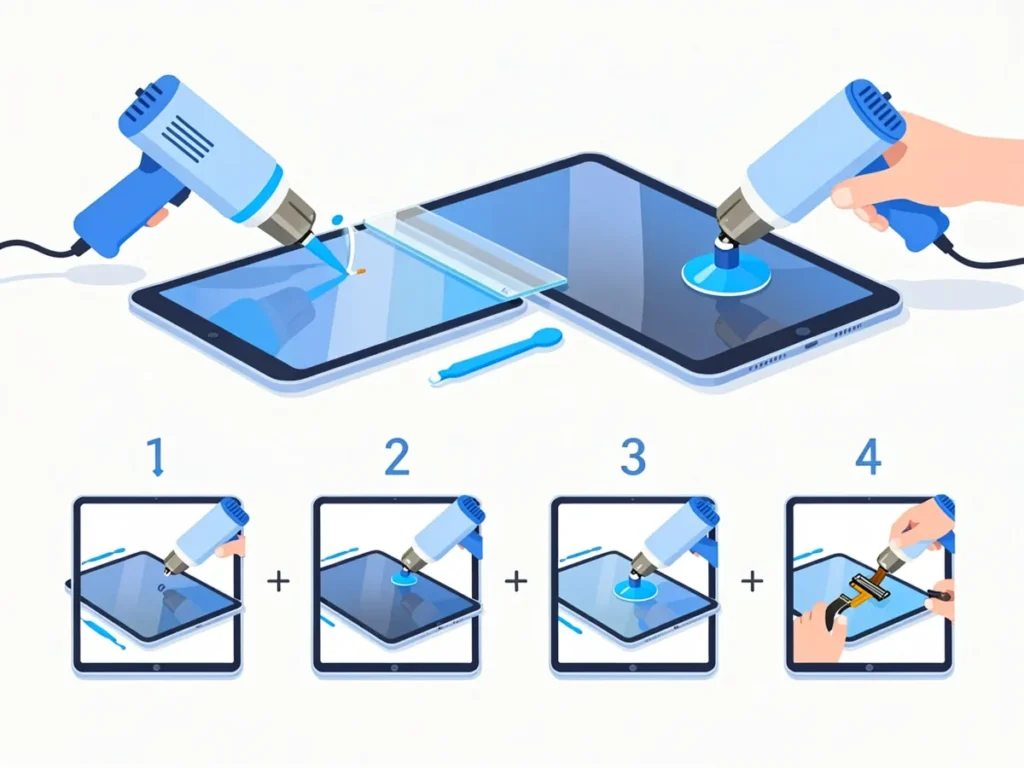
Technicians use heat plates and vacuum separators to remove glued layers safely
Proper adhesive application restores structural integrity and water resistance
30–90 day warranty on workmanship provides peace of mind
Professionals can spot hidden issues you would not notice until weeks later
Same-day service available at many independent shops in major cities
When to Repair vs Replace Your iPad
Sometimes spending money on a screen repair is not the smart financial move. Consider these questions before deciding:
Is your iPad less than 4 years old? Repairing an older model often costs more than the device is worth on the second-hand market.
Does it have other problems? Battery swelling, logic board issues, or water damage make screen repair a waste of money.
Can you afford downtime? Professional repairs take 1–2 days. DIY means figuring it out yourself over a weekend with no guarantee of success.
Is the repair cost less than 50% of a used replacement? If fixing your current iPad costs more than buying a used working unit, replacement may be better.
For example, repairing an iPad 7 (released 2019) for R1,800 might be worthwhile if the rest of the device functions well. But spending R2,500 on an iPad Air 4 that already has battery issues probably does not make financial sense.
How to Choose a Reliable Repair Shop
Not all repair shops provide equal quality. Here is how to find a reputable service provider in South Africa:
Ask about part origin. Reputable shops will tell you whether they use original Apple parts, OEM equivalents, or aftermarket glass.
Request a written quote. Verbal estimates are not binding. Get the price in writing before authorising work.
Check warranty terms. Minimum 30 days on workmanship is standard. Longer warranties indicate confidence in quality.
Read reviews. Check Google Reviews, Facebook, or local community groups for feedback on specific shops.
Avoid mall kiosks for complex repairs. Quick-turnaround shops in shopping centres may lack the equipment and expertise for proper adhesive application.
FAQ
Can I use my iPad with a cracked screen?
Yes, but cracks worsen over time. Small hairline fractures can spread from temperature changes or pressure. If the crack is near the edge and does not affect touch response, you can use it carefully with a screen protector applied over the crack. If it is in the middle of the display or touch is affected, replace it soon.
Does AppleCare+ cover cracked iPad screens?
If you have AppleCare+, screen replacement costs a service fee of R450–R650 instead of the full repair cost. Check your coverage at supports.apple.com before assuming you will pay full price. AppleCare+ also covers accidental damage, which standard warranty does not.
How long does a professional repair take?
Most shops complete standard iPad screen replacements in 1–2 hours. iPad Pro 12.9-inch models take longer due to the larger display and more complex assembly. First-time DIY attempts can take 2–4 hours and may require a second attempt if the glass does not lift cleanly.
Will a DIY repair void my warranty?
Any unauthorized repair voids Apple warranty coverage. If your iPad is still under warranty or AppleCare+, professional repair through an Authorised Service Provider is the safest option. Third-party repairs may affect future service eligibility.
Understanding iPad Display Technology
iPads use different display technologies across models and generations. Knowing which type your iPad has helps you understand repair options and costs:
LED-backlit LCD. Found in older iPad models (pre-2018). These displays use a traditional liquid crystal layer with LED backlighting. Repair is relatively straightforward when only the glass is cracked.
IPS LCD. Used in most current iPad models except Pro. Offers better colour accuracy and viewing angles than older LED-backlit displays.
Mini-LED (Liquid Retina). Available on iPad Pro 12.9-inch and iPad Pro 11-inch (3rd generation and later). These displays offer superior contrast and brightness but are more expensive to replace.
OLED (expected). Apple has not yet released an OLED iPad, but industry analysts predict it may arrive in future Pro models. OLED repairs would be significantly more costly than LCD alternatives.
Display type affects both repair cost and availability of replacement parts. Older models may have discontinued parts, while newer models with advanced displays command premium prices.
The iPad Screen Repair Process Explained
Understanding what happens during a professional screen replacement helps you evaluate repair quality:
Disassembly. The technician removes the screen assembly carefully using heat and specialized tools to soften the adhesive without damaging surrounding components.
Separation. If only glass is damaged, the broken glass is separated from the intact display using a wire or machine. If the LCD is also damaged, the entire assembly is removed.
Cleaning. Residual adhesive is cleaned from the frame using specialized solvents. This step is critical for proper reattachment.
Reattachment. New adhesive strips or liquid adhesive is applied, and the replacement glass or display is positioned precisely.
Curing. The adhesive is allowed to cure under pressure and sometimes heat to ensure proper bonding.
Testing. Touch response, display functionality, and seal integrity are checked before the device is returned.
Quality varies significantly between shops. Cheap repairs may skip steps or use inferior adhesive, leading to premature failure or water damage.
Legal and Warranty Considerations
Before repairing your iPad, understand your legal rights and warranty status:
Consumer Protection Act. South African law provides protection against defective goods and services. Reputable repair shops must provide work that is reasonably fit for purpose.
Apple Warranty. If your iPad is still under manufacturer warranty, unauthorized repairs void coverage. Check warranty status at checkcoverage.apple.com before deciding.
AppleCare+. This extended coverage plan reduces screen replacement costs significantly but requires authorized service providers.
Third-party warranties. Independent shops typically offer 30–90 day warranties on workmanship. Get warranty terms in writing before authorizing repair.
Always ask about warranty coverage before choosing a repair provider. A slightly higher price with better warranty protection may save money long-term.
Preventing Future Screen Damage
Once your iPad screen is repaired, take steps to prevent future damage:
Use a protective case. Cases with raised edges protect the screen when the iPad is placed face-down.
Apply a screen protector. Tempered glass protectors absorb impact that would otherwise crack the display.
Avoid placing heavy objects on the iPad. Backpacks, bags, and stacked items can exert pressure on the screen.
Keep the iPad away from edges. Most drops occur when the device slides off tables, beds, or counters.
Store in a dedicated compartment. When transporting, use a padded sleeve or compartment rather than loose bag storage.
Prevention is far cheaper than repair. A R150 screen protector and R300 case cost significantly less than a R1,500 screen replacement.
Regional Price Variations Across South Africa
Repair costs vary significantly across South African cities. Understanding regional differences helps you find the best value:
Johannesburg. Highest concentration of repair shops creates competition, but rent costs drive prices up 10–15% compared to other cities.
Cape Town. Similar pricing to Johannesburg, with slightly higher costs in Atlantic Seaboard and Southern Suburbs areas.
Pretoria. Often 5–10% cheaper than Johannesburg for comparable services, with good quality providers near universitites and technology hubs.
Durban. Generally 10–20% cheaper than Johannesburg and Cape Town, making it an attractive option for inland residents willing to travel.
Smaller cities. Bloemfontein, Port Elizabeth, and Polokwane often have lower prices but fewer specialized iPad repair options.
Mail-order repair services have emerged as an alternative, allowing you to send your device to specialized shops anywhere in the country. This can access better expertise but adds shipping risk and time.
The Economic Impact of Screen Damage
A cracked iPad screen affects more than just aesthetics. Consider these practical consequences:
Resale value. An iPad with cracked screen sells for 30–50% less than a comparable working unit.
Safety risk. Sharp glass edges can cut fingers and contaminate work surfaces.
Functionality. Touch response degrades over cracked areas, making navigation difficult.
Psychological impact. Many users report stress and frustration from using damaged devices daily.
Productivity loss. For students and professionals, a damaged screen reduces work efficiency.
These factors should be weighed against repair costs when deciding whether to fix or replace.
When DIY Repair Makes Financial Sense
DIY repair is not always a bad choice. Consider these scenarios where self-repair may be appropriate:
Glass-only damage on older models. If your iPad is 4+ years old and only the glass is cracked, a R400 DIY kit may be worthwhile.
Access to good tutorials. iFixit and YouTube provide detailed guides for many iPad models.
Time flexibility. If you can spend a weekend on the repair without urgent device needs.
Learning opportunity. First-time repairs build skills for future self-sufficiency.
However, for newer iPads with expensive displays, professional repair usually provides better value through warranty protection and guaranteed quality.
Technology Trends in iPad Repairs
The iPad repair landscape continues to evolve. Understanding current trends helps you make informed decisions:
Right to Repair movement. South Africa has been discussing legislation to improve consumer access to repair services and parts. This could reduce costs and increase competition.
Apple’s Service Program. Apple occasionally runs voluntary service programs for specific issues, sometimes covering repairs outside warranty.
Third-party part quality. OEM glass quality has improved significantly, with some suppliers offering warranties comparable to original parts.
Mobile repair services. Technicians now offer on-site repairs in many South African cities, reducing the need to transport devices.
These trends generally benefit consumers through increased access and competitive pricing. Stay informed about policy changes that may affect repair costs in the future.
Environmental Considerations
Device repair has environmental benefits beyond cost savings:
E-waste reduction. Repairing extends device lifespan, keeping electronics out of landfills.
Resource conservation. Manufacturing new devices requires mining, energy, and water resources.
Carbon footprint. Repair typically generates less emissions than producing a replacement device.
South Africa faces growing e-waste challenges. Extending device lifespans through repair is both economically and environmentally sensible.
Disclaimer: POTATOTECH is currently preparing our online store. Prices quoted are estimates based on market research from South African repair shops and may vary. For current pricing and availability, contact us at support@potatotech.co.za.
About This Guide
POTATOTECH publishes research-based guidance on electronics repair, replacement parts, tools and device compatibility for South African users.
Our content may reference manufacturer documentation, product specifications, technical repair resources and South African market information where relevant.
Where POTATOTECH has not independently tested a product or repair method, researched information is not presented as first-hand testing.
About POTATOTECH: /about-us/
Important
POTATOTECH provides information about replacement parts, repair tools and device compatibility.
POTATOTECH is not affiliated with or endorsed by device manufacturers unless explicitly stated. Product names, trademarks and brands belong to their respective owners.
Compatibility information is provided as guidance. Always confirm the exact device model, model number and relevant part specifications before selecting or purchasing a replacement part.
Repair information is provided for general informational purposes. Follow manufacturer guidance and appropriate safety precautions when carrying out repairs.
Choosing the right Bluetooth headphones in South Africa isn’t just about picking the first pair you see. Whether you’re commuting on the Gautrain, working from home, or gaming online, the right headphones make a real difference to your experience—and your wallet. This guide breaks down what actually matters when you’re shopping for wireless headphones in […]