
If you have ever watched a technician open a smartphone in under five minutes and wondered how they do it without turning the device into a paperweight, the answer usually sits in one small case. A 26-in-1 toolkit is the starting point for almost every modern teardown—the collection of precision bits, picks, tweezers, and spudgers that lets you get inside a phone, tablet, laptop, or game controller without stripping a screw or cracking a shell. This article is not opinion. Every claim below is anchored to figures from market research, legislation, and e-waste reporting, because the case for owning a 26-in-1 toolkit is strongest when you look at the data.
Three things are happening at once, and they all point the same direction: people are repairing more, and they need the right tools to do it.
Devices are more repairable on paper than they used to be. After years of sealed, glue-heavy designs, manufacturers are shifting under regulatory and consumer pressure. Apple’s iPhone 16, for example, scored a 7/10 on iFixit’s repairability scale — the highest rating iFixit has given an iPhone in years — largely because a new electric-release adhesive makes the battery far easier to remove. That is a big change from the iPhone 15, which scored just 4/10.
Repair is becoming a legal right, not a favor. Right-to-repair laws are now in force across the European Union and in a growing list of US states, forcing manufacturers to make parts, tools, and manuals available. When the law says you can fix your own gear, the demand for affordable, general-purpose toolkits rises with it.
South Africans are sitting on a mounting pile of e-waste. The country generates over 500,000 tonnes of electronic waste every year, and only a small fraction is formally recycled. Keeping a device alive is one of the most direct ways an individual can cut that number.
A 26-in-1 toolkit does not make you a micro-soldering expert. It gives you the leverage to attempt the repairs that actually come up most often — battery swaps, screen lifts, connector reseats and cleaning — before they become reasons to bin a device.
The global smartphone repair market is large and growing. Industry analysts put its value at roughly US$75 billion in 2025, with QYResearch forecasting it to reach about US$303 billion by 2032 and pmarketresearch projecting US$119 billion by 2032 — the gap reflecting how broadly analysts define “repair” (bare screen and battery work versus the full after-sales services category). Either way, the direction is up, with compound annual growth estimated in the 5–7% range through the early 2030s.
One segment dominates. Screen repair alone accounts for roughly 40–45% of all repair spend, because displays are the single most fragile and most frequently damaged part of a modern phone. Batteries are the close second—they degrade on a predictable clock regardless of how careful you are.
The installed base behind that spending is enormous: more than 6.5 billion active mobile devices are in use worldwide, and smartphone ownership sits above 85% among adults in most developed markets. Every one of those devices will, statistically, need a battery, a screen, or a port at some point. That is the quiet, durable demand that a 26-in-1 toolkit is built to serve.
| Metric | Figure | Source / note |
|---|---|---|
| Global smartphone repair market (2025) | ~US$75 billion | market research |
| Forecast market size (2032) | US$119B–US$303B (range by definition) | pmarketresearch / QYResearch |
| CAGR through 2032 | ~5–7% | blended analyst range |
| Screen repair share of spend | ~40–45% | largest single segment |
| Active mobile devices worldwide | 6.5 billion+ | industry installed-base estimates |
| Adult smartphone ownership | 85%+ | developed-market surveys |
For two decades, manufacturers argued that locking repairs behind official service centers protected their intellectual property and their customers. The legal tide has turned.
The core obligations are consistent across jurisdictions: manufacturers must sell replacement parts to owners and independent shops at fair prices, publish service manuals and diagnostic tools, and cannot void a warranty simply because an independent technician did the work. The newest and most contested piece is firmware and software access—the keys needed to clear fault codes and recalibrate sensors after a hardware repair.
When the law guarantees access to parts and manuals, the bottleneck moves from “Can I get the part?” to “Do I have the tools and the nerve?” A 26-in-1 toolkit answers the second half directly.
South Africa does not yet have a dedicated right-to-repair law. What it does have is an e-waste framework that points the same way: Extended Producer Responsibility (EPR) regulations, enforced from 2021 (gazetted in November 2020), make producers, importers, and retailers financially responsible for the end-of-life handling of the electronics they sell. A first national WEEE (Waste Electrical and Electronic Equipment) policy was gazetted in 2024. Community repair culture—repair cafés and informal fix-it networks—is also growing locally. The legal tool may lag the EU and US, but the direction is the same: repair is becoming the expected, supported option rather than the exception.
This is the part that should sharpen anyone’s resolve to repair rather than replace.
South Africa generates over 500,000 tonnes of e-waste every year—about 514 kilotonnes by one local estimate, with others putting it closer to 530,000 tonnes. The average South African produces roughly 6–8 kg of e-waste annually. Yet only about 7–12% is formally recycled; some industry estimates put the figure below 10%. The rest ends up in landfills, informal dumps, or is dismantled by hand without protection—releasing lead, mercury, and cadmium into soil and groundwater.
E-waste has been banned from South African landfills since August 2021, but bans without collection infrastructure only go so far. The economic upside of getting this right is real: recycling just one tonne of mobile phones yields about 34 grams of gold, 350 grams of silver, and 16 kg of copper. Scale that across the country and e-waste stops being a liability and becomes a recoverable resource.
| South Africa e-waste at a glance | Figure |
|---|---|
| E-waste generated per year | 500,000+ tonnes |
| Formally recycled | ~7–12% (some say <10%) |
| Landfill ban in effect since | August 2021 |
| EPR regulations enforced | from 2021 (gazetted 2020) |
| National WEEE policy | gazetted 2024 |
| Recovered from 1 tonne of phones | ~34g gold, 350g silver, 16kg copper |
Globally the picture is starker: the UN Global E-waste Monitor 2024 estimated 62 million tonnes of e-waste generated worldwide in 2022, with Africa formally recycling less than 1% of its share. Every device you extend by a year is a small, real subtraction from that pile.
Enough context—what do you actually get in the case? Using the real 26-in-1 Precision Electronics Repair Tool Kit stocked locally as a reference (brand: DIGIMARK, SKU SPBE0322), a proper 26-piece set is built around a small number of job families:
The kit is rated for phone, tablet, laptop, PC, and small-electronics repair, and it ships from local South African stock with a 6-month warranty. That local availability matters more than it sounds: when a device is open on your desk, waiting two weeks for a tool from overseas is not an option.
The product listing carries a compatibility warning that is worth repeating here, because it is where beginner repairs go wrong:
None of this is a reason to avoid the repair. It is a reason to own the right kit and to respect the opening step.
iFixit’s teardown scores are more than a rating—they tell you how much fighting the device will put up. The trend line is the story.
The pattern across the industry is that a large share of modern phones still rely on sealed, adhesive-held assemblies, which is exactly why a 26 in 1 toolkit leads with picks, spudgers, and a magnetic driver rather than brute force. The tools exist to work *with* the device’s design, not against it.
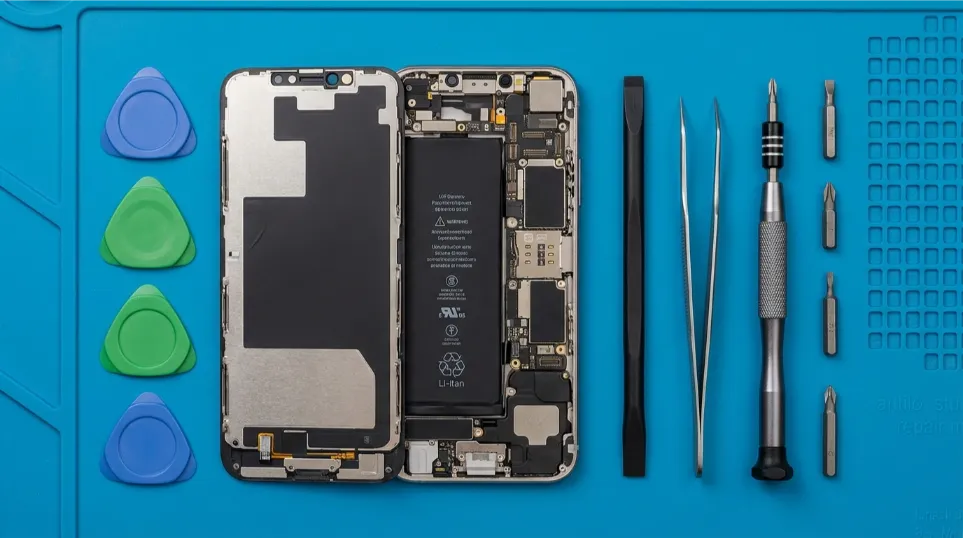
Not all kits are equal. A few checks before you buy—or before you reach for the one you already own.
Count the bit types, not just the pieces. “26 in 1” describes the count, but what matters is coverage. Make sure the set includes the obscure heads (Pentalobe, Tri-point, and Torx security) you will hit on phones and game controllers, not just Phillips and flat.
Insist on a magnetic driver. Magnetic tips hold screws in place at the exact moment gravity is working against you. Non-magnetic sets turn a five-minute job into a half-hour search.
Check the case. If the bits rattle loose, you will lose the one you need. A moulded, labelled case is worth more than a pretty box.
Match it to South African reality. Local stock means no two-week wait when a repair lands on your desk. A kit shipped from a local warehouse, with a local warranty, removes the two biggest friction points for a first-time repairer.
meter, pair it with the rest of the bench. A 26-in-1 toolkit opens the device and seats the screws; it does not measure, heat, or resolder. For the full picture, the Screwdriver & Opening Kits subcategory is where this kit lives, and the broader repair-tools range covers the iron, the meter, and the aids that turn an opening into a finished repair.

It is a general-purpose precision opening and fastening set for consumer electronics. The bits, picks, tweezers, and spudgers cover phone, tablet, laptop, PC, and small-device repairs—opening the shell, removing screws, lifting connectors, and handling tiny parts.
For the most common faults—battery swaps, screen lifts, port cleaning, and connector reseats—yes. Work that needs soldering or micro-component replacement calls for additional tools like a soldering iron and a multimeter, but the 26-in-1 kit is the foundation.
A magnetic driver holds screws in place on the tip, so they do not drop into the device or onto the floor. It is one of the single most useful features for repair work at this scale.
No formal training is required for mechanical repairs like opening and seating. Follow a guided teardown for your specific device, photograph every connector before you pull it, and work slowly. Measurement and soldering are the skills you add later.
The screw and clip standards on phones, tablets, and laptops are global, so a 26-in-1 kit works on locally sold devices regardless of brand. The compatibility warning about glued screens and bit sizing still applies to every make.
South Africa does not yet have a dedicated right-to-repair law, but EPR regulations (enforced from 2021) and a national WEEE policy (gazetted 2024) push producers toward responsible end-of-life handling, and community repair culture is growing. The practical right to fix your own gear is already yours.
Every device you repair instead of replace is one less item entering South Africa’s 500,000-tonne annual e-waste stream. Multiply that across a country of device owners, and the recovered materials—gold, silver, copper—stay in circulation instead of in a landfill.
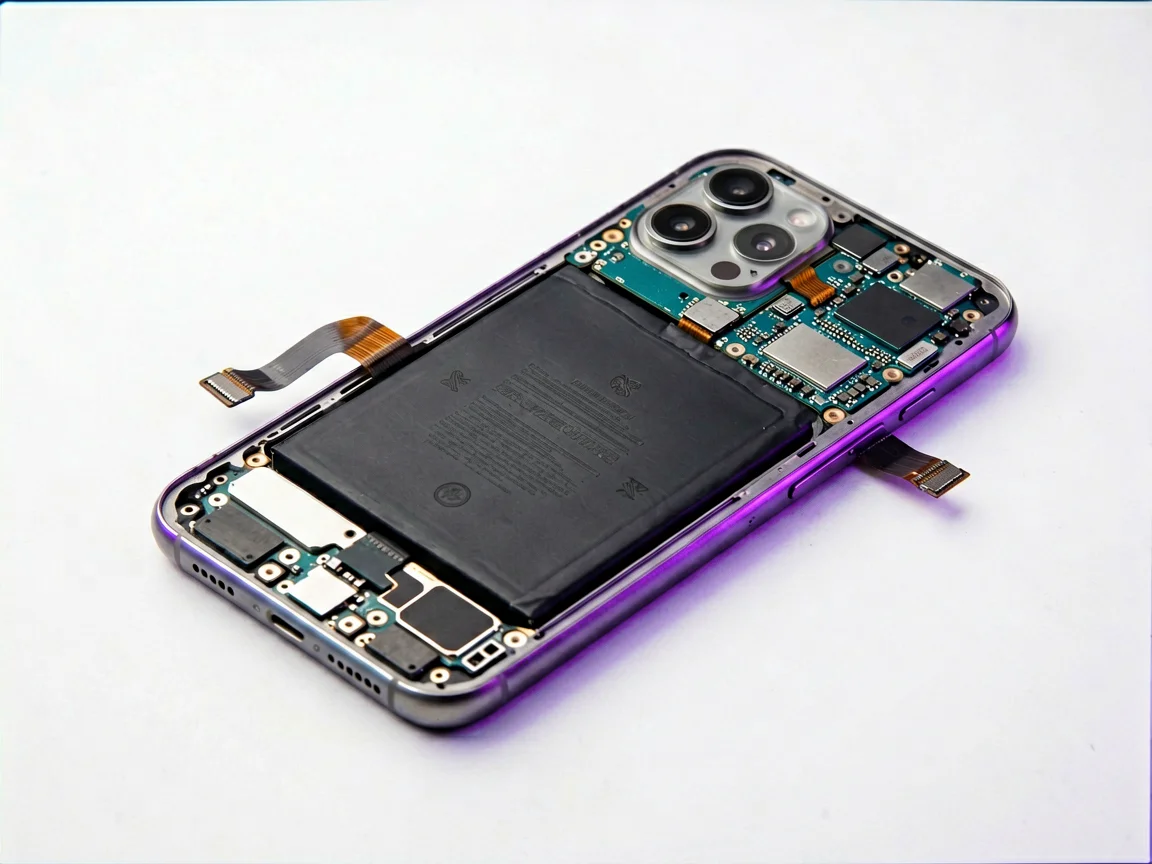
A 26-in-1 toolkit is a small purchase with outsized leverage. The data backs the instinct: a growing global repair market, right-to-repair laws spreading across the EU and US, and a South African e-waste pile that urgently needs more devices kept in service. Pair the kit with patience, a steady hand, and the compatibility warnings above, and the repairs that used to mean “buy a new one” become a quiet afternoon on the desk.
For the full bench, browse the repair-tools category, or start with our phone repair tools guide that maps these tools onto a real teardown.
Information Notice: Product names, specifications, prices, stock levels and delivery options mentioned or linked above may change. The specific product referenced (26-in-1 Precision Electronics Repair Tool Kit, DIGIMARK, SKU SPBE0322) is listed in the live catalogue, but availability and warranty terms should be confirmed before ordering. For current availability, specifications or delivery details, please use our Contact Us page. Nothing in this article constitutes a purchase offer or commitment to supply. Market, legislative and e-waste figures are drawn from the cited sources and were accurate to the best of our knowledge at the time of writing.
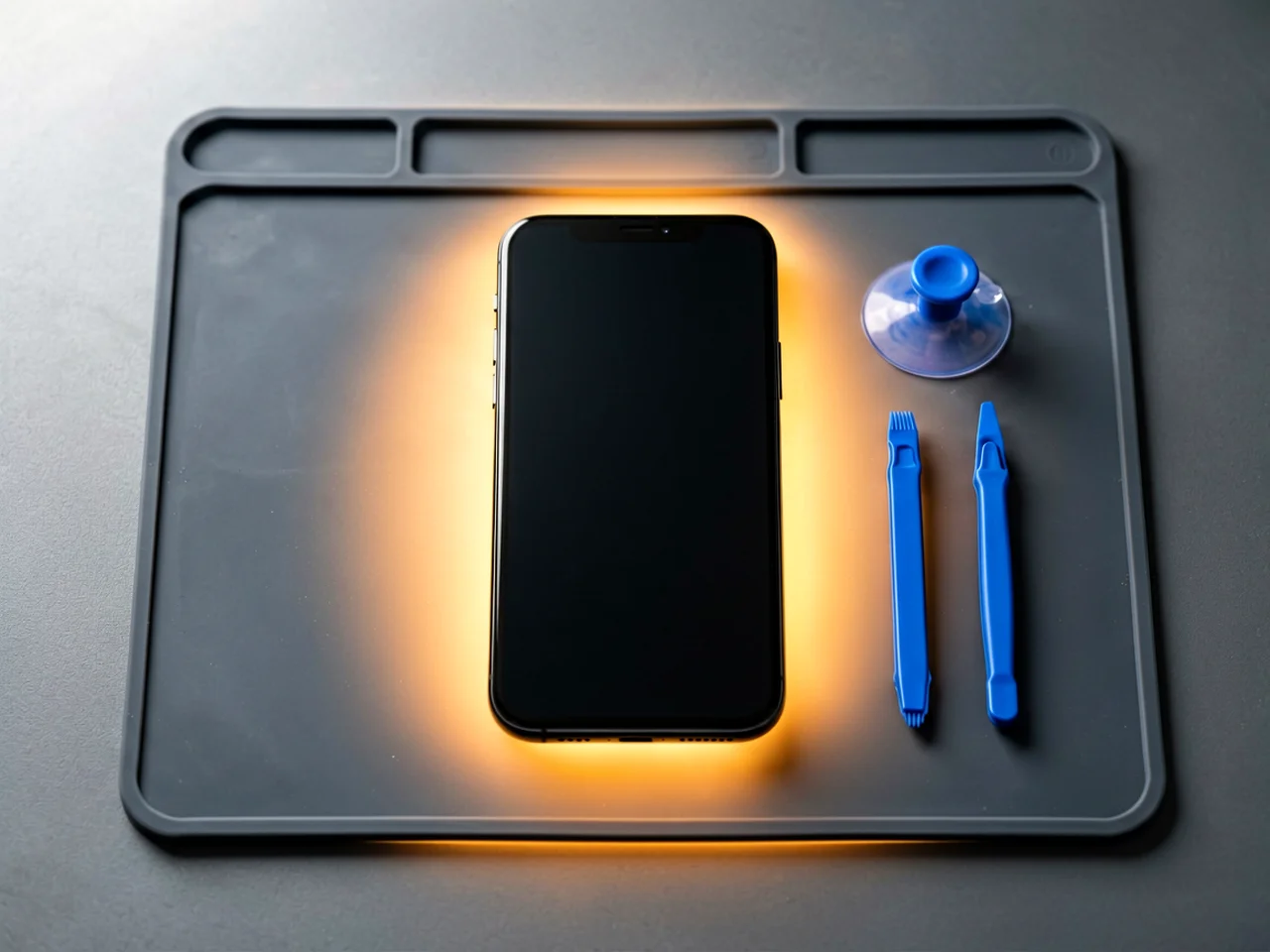
Most cracked phone panels don’t come from a shaky hand. They come from the wrong temperature. Heat the adhesive too little and the glass fights you until it snaps. Heat it too much, or in one spot, and you cook the panel underneath instead — which is how “repair” turns into “replace”. This guide is […]

You tap an app and nothing happens for ten seconds, then the whole screen freezes mid-animation. You wait, you tap again, the phone buzzes once and sits there. Sometimes a restart clears it for a day, sometimes it freezes again as soon as you open WhatsApp, and sometimes it started after an update or when […]

You open Maps or your taxi-hailing app, and the blue dot never settles, or it places you three streets away. You stand outside with a clear sky above you, and the phone still takes minutes to lock on, or it locks on and then drops your position into the middle of a field. Sometimes the […]
One Response